Why Investing in Dubai Makes More Sense Than Any Other Country
As global uncertainty rises, investors, families, and business owners are choosing Dubai for asset protection, residency, and long-term security.

People don’t wake up wanting to move their money or their life overseas. They do it when staying put starts to feel risky; when taxes rise, rules change, safety feels uncertain, and long-term planning no longer feels possible. For many, that’s exactly where the conversation about Dubai begins.
But Dubai isn’t winning because it’s trendy or tax-free. It’s winning because, at a time when options are shrinking, it still works. And as more people look toward Dubai, one thing becomes clear very quickly: investing here isn’t just about choosing the right property, but about making the right decisions in the right order. This article explores why investing in Dubai makes more sense right now and why informed guidance plays a quiet but crucial role in getting it right.
The question why invest in Dubai comes up a lot and usually gets answered far too quickly. Safety, low taxes, and modern infrastructure are often the first things mentioned, and while all of that is true, it doesn’t really explain why Dubai keeps pulling ahead while so many other well-established countries are struggling.
What makes Dubai different isn’t one single benefit. It’s how the city has adapted to a world that feels increasingly uncertain. As political tension, economic pressure, and policy changes make long-term planning harder in many countries, Dubai has quietly positioned itself as a place that still offers something people are actively looking for: stability, clarity, and a sense of control over their future.
This hasn’t happened by accident. Dubai didn’t just promote a good lifestyle, it responded to gaps that were opening elsewhere. While other governments introduced higher taxes, tighter regulations, or unpredictable changes around property, business, and residency, Dubai focused on keeping its systems clear, accessible, and forward-thinking.
For investors, families, and business owners alike, this matters more than ever. The ongoing strength of the Dubai real estate market isn’t driven by hype or short-term trends. It’s driven by people making practical decisions about where they can live safely, grow their assets, and plan long-term without constantly worrying about what rules might change next.
That’s why investing in Dubai continues to make sense; not just as a lifestyle choice, but as a strategic one in a world where dependable options are becoming increasingly rare.
When people talk about moving or investing in Dubai, it’s often framed as a choice; a lifestyle upgrade, a tax decision, or a change of scenery. In reality, for many people, it doesn’t feel like a choice at all. It feels like a response.
Across many first-world nations, long-term residents are experiencing what can best be described as policy fatigue. Rules keep changing, often without warning, and people are left constantly adjusting their lives, finances, and future plans to keep up.
Tax structures shift. Property regulations tighten. Inheritance rules become more complex and expensive. Business ownership feels increasingly restricted. Over time, this creates a sense of being trapped in a system where the goalposts are always moving.
As a result, trust starts to erode and not just in leadership, but in the idea that long-term planning is even possible anymore.
Nowhere is this felt more strongly than in the erosion of generational wealth, particularly across Western markets. In countries like the UK, rising inheritance and capital taxes mean that even those who spend decades building assets may see much of it reduced before it ever reaches the next generation. The message many families are hearing, intentionally or not, is simple: build your life here, but don’t expect to keep it or pass it on easily.
This is where Dubai enters the picture. Not as a luxury escape, but as a place where people can still make long-term plans with clarity. Where asset ownership is straightforward. Where success isn’t penalised retroactively. And where families and business owners can think beyond just surviving the next policy change.
This global pressure, not marketing or hype; is what continues to drive people toward Dubai. And it’s why investing in Dubai real estate remains resilient, even when other markets struggle to maintain confidence.
When people assume Dubai’s growth is driven by hype or short-term trends, they usually overlook one key factor: people aren’t all coming from one place, for one reason, at one time. Dubai’s strength lies in the fact that demand is coming from many countries, each facing its own pressures and all converging on the same solution.
Here’s a realistic look at why people are leaving some of the world’s most established nations and turning toward Dubai instead.
For many UK residents, life after Brexit has felt unsettled and unpredictable. What was once seen as a stable environment for building long-term wealth now feels increasingly difficult to navigate.
Key concerns include:
France continues to experience recurring social unrest, most visibly through movements such as the gilets jaunes. While these issues may come and go, the underlying pressures remain.
Many residents are struggling with:
For professionals and investors, the issue isn’t a lack of culture or opportunity, it’s the growing sense that the effort and stress involved no longer justify the return.
Canada has long been viewed as a safe and welcoming place to settle, but in recent years, sentiment has shifted noticeably. While it remains a desirable country in many ways, everyday realities are becoming harder to ignore.
Common concerns include:
In the United States, political division has become part of everyday life. Even for those who are financially comfortable, uncertainty plays a growing role in decision-making.
Key factors driving people to reconsider include:
Although each of these countries faces very different challenges, the outcome is often similar: restricted options.
Residents from these regions commonly face:
Dubai’s neutrality, openness, and geographic proximity make it one of the few places where individuals can continue to live, work, and operate businesses without constant barriers.
Venezuela stands as one of the clearest examples of forced economic migration. Years of instability have made it extremely difficult for individuals and families to protect their income or plan for the future.
Challenges include:
For many Venezuelans, Dubai offers something very simple but powerful: the ability to earn, save, and rebuild without fear that everything could change overnight.
When people struggle to explain why Dubai keeps attracting people from all over the world, the answer is often simpler than it sounds. Dubai works because it remains one of the last truly open systems in a world where options are steadily narrowing.
While many countries are closing doors either through policy, politics, or regulation, Dubai has taken a different approach. It has positioned itself as a place where people from very different backgrounds can still live, work, and build without being forced into a single political, cultural, or ideological framework.
What makes Dubai fit when other places no longer do come down to a few very practical realities?
Dubai doesn’t rely on one country or one demographic to sustain itself. Instead, it welcomes people from across Europe, North America, Asia, the Middle East, and beyond; all at once. This diversity isn’t just visible; it’s built into how the city functions.
This global mix is a key reason why Dubai remains resilient, especially during periods of global uncertainty.
In many parts of the world, doing business increasingly comes with ideological expectations, heavy regulation, or shifting political agendas. Dubai keeps things far more straightforward.
People don’t need to agree with a particular political direction to succeed here, they simply need to comply with the system.
Dubai’s neutrality plays a major role in its appeal. It is not driven by global conflicts or political positioning, which makes it a practical base for people from many regions.
For families and investors alike, this sense of security removes a layer of daily stress that has become common elsewhere.
Perhaps most importantly, Dubai is a place where everyday life works. It’s not just an investment destination, it’s a place where people can realistically build a future.
People come to Dubai because they can:
Plan long-term without constant policy anxiety
People often ask when Dubai’s property market will crash, especially when comparing it to other global cities that have gone through sharp downturns. But Dubai’s market works very differently. Demand here doesn’t rely on one country, one economy, or one type of buyer. When demand slows from one region, it is quickly replaced by buyers from somewhere else. People aren’t leaving in large numbers, they’re being replaced by new inflows from different parts of the world.
Another important difference is why people are buying. Much of Dubai’s demand today isn’t driven by short-term speculation. Buyers are relocating their lives, businesses, and savings because of uncertainty in their home countries. When people move for these reasons, they tend to hold property long term rather than sell quickly, which naturally keeps the market more stable.
Dubai also benefits from its diversity. Buyers come from Europe, North America, Asia, the Middle East, and South America, often at different times and for different reasons. This means the market doesn’t depend on a single country or crisis. Instead of sudden spikes and crashes, Dubai absorbs global wealth gradually as different regions face their own challenges.
Because of this structure, Dubai’s property market hasn’t collapsed and there are no clear signs suggesting it will. As long as global uncertainty continues and Dubai remains open, stable, and practical, demand is likely to stay strong. This stability isn’t accidental; it’s the result of how the market has been built and sustained over time.
A clear long-term vision
Dubai’s growth is guided by long-term planning, not short-term trends. The 2040 Vision sets clear direction for how the city develops, expands, and improves living standards over time.
Infrastructure built ahead of demand
Instead of waiting for pressure to build, Dubai invests early. Roads, transport, communities, airports, and commercial areas are designed for future population growth, which keeps the city efficient as it expands.
Regulations that evolve with the world
Dubai regularly updates its laws and systems to match global investor and resident needs. Business setup, property ownership, visas, and residency rules adapt as the market changes, rather than staying rigid.
A strong track record of delivery
Dubai has consistently followed through on what it announces. Projects are completed, infrastructure improves, and standards rise; building real trust, not just headlines.
Competing with its own success
At this stage, Dubai is no longer trying to catch up with other cities. It is focused on outperforming its own past achievements and setting higher benchmarks each year.
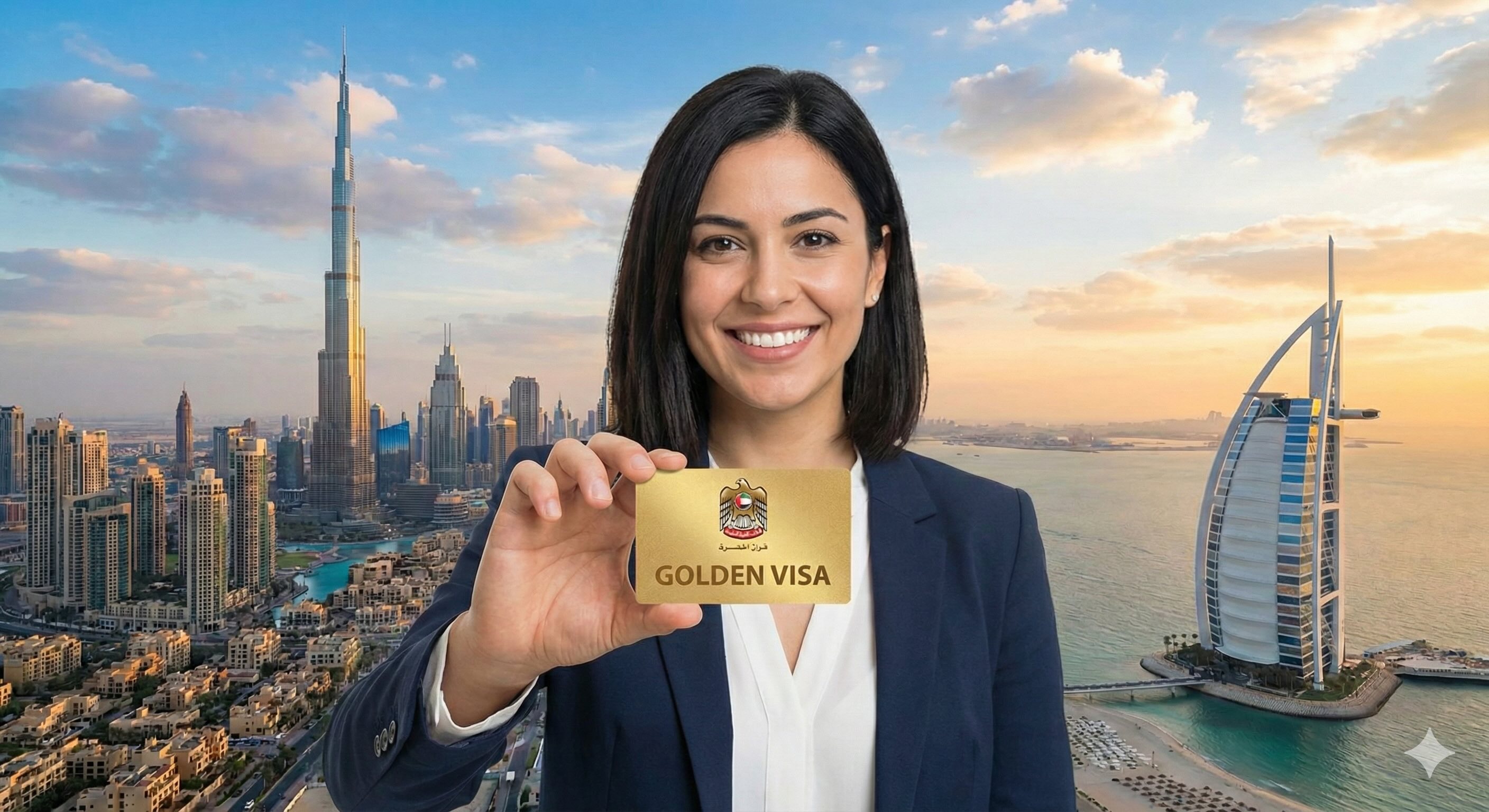
For a long time, Dubai was seen as a place to live temporarily; a few years for work, business, or lifestyle, and then move on. That perception has changed. The introduction and expansion of the Golden Visa marked a clear shift in direction: Dubai is no longer just welcoming people to stay, it is encouraging them to settle long term.
This shift hasn’t happened accidentally. It’s been designed to attract people who are serious about building a future, not just passing through.
One of the most important changes is the link between property ownership and long-term residency. Investors who purchase qualifying real estate can now secure long-term residency without needing local sponsorship.
This has made long-term planning far simpler for investors and families who want stability.
The Golden Visa removes much of the uncertainty that previously came with living in Dubai.
For many people, this is the difference between trying Dubai and committing to it.
Alongside residency, Dubai has extended access to services that make long-term living more practical and comfortable.
These changes reflect Dubai’s intent to support everyday life, not just investment.
Another important shift is the growing alignment with Western expectations around family and parental rights.
This has played a key role in attracting families who want stability without cultural or legal uncertainty.
Dubai is often described as “tax-free,” and while that idea attracts attention, it can also create unrealistic expectations. The truth is, Dubai is not free but its costs are clear, predictable, and transparent, which is exactly why many people prefer it.
Unlike other countries where costs appear slowly through hidden taxes, rising contributions, or sudden policy changes, Dubai’s costs are mostly upfront and known from the beginning.
Here’s what people should realistically expect.
When purchasing property in Dubai, buyers should be aware of the Dubai Land Department (DLD) fee.
There are also standard administrative and registration fees involved in property transactions. These are straightforward and disclosed early in the process.
For those setting up businesses, Dubai requires proper licensing and registration.
While these are real costs, many business owners find them easier to manage than complex tax systems elsewhere.
Residency in Dubai comes with its own fees.
Again, these are known expenses and not ongoing financial uncertainty.
Dubai operates largely on a private healthcare and education model, which means quality is high but costs can be significant.
For many families, the difference is choice and quality rather than affordability alone.
Rental prices in Dubai have increased, particularly in high-demand areas.
Like any relocation, there is a learning curve but it is not unique to Dubai.
When people look at Dubai from the outside, they often focus on the costs; school fees, healthcare, rent increases, setup expenses and assume these should slow the market down. But in reality, they haven’t. And the reason is simple: when people compare Dubai to the alternatives, the trade-offs feel manageable.
People aren’t looking for a perfect system. They’re looking for one that works and most importantly, one that doesn’t keep changing the rules after they’ve already committed.
One of the biggest reasons people feel comfortable in Dubai is financial freedom.
For many people coming from high-tax or highly regulated systems, this sense of control alone outweighs the visible costs.
A major frustration in many Western countries is uncertainty. People plan carefully, invest long term, and then find the rules change unexpectedly.
In Dubai:
This stability is something Diamond highlights again and again as a key reason people stay.
Dubai’s systems can feel unfamiliar at first, especially for newcomers. But once understood, they are actually very straightforward.
This learning curve is expected when moving anywhere but in Dubai, once you’re through it, things tend to run smoothly.
For many families and business owners, the decision isn’t just financial, it’s about quality of life.
People consistently prioritise:
When weighed against rising taxes, social instability, or unpredictable governance elsewhere, Dubai’s costs feel like a fair exchange.
The reason these “cons” haven’t slowed demand is because people aren’t comparing Dubai to an ideal version of their home country, they’re comparing it to the reality they’re living in now. And in that comparison, Dubai continues to come out ahead.
That’s why demand hasn’t faded. People aren’t just arriving; they’re staying, committing, and planning long term.
One of the biggest misconceptions about Dubai is that it’s only for the ultra-wealthy — people trying to avoid taxes or live extravagantly. In reality, that’s not who is driving most of the demand today.
Dubai attracts a much wider and more practical group of people. Most are not looking to escape responsibility, they’re looking for stability, safety, and a system that allows them to plan their future properly.
Dubai is increasingly for:
These people aren’t looking for shortcuts. They’re looking for a place where effort still leads somewhere, and where long-term decisions don’t feel like a gamble.
Dubai fits that need!
A common concern people raise is whether Dubai’s market is just riding a temporary wave. But the reality is that Dubai’s growth isn’t tied to a single boom cycle, it’s supported by ongoing global pressure coming from multiple directions.
Unlike markets that depend on one economy or one trend, Dubai is being fuelled by several global crises happening at different times. Political instability, tax pressure, restricted mobility, and economic uncertainty in many regions all feed into one place and that place is Dubai.
Key reasons the market remains structurally strong include:
Because of this, Dubai acts as a long-term hedge against geopolitical uncertainty. When one region stabilises and slows, another begins to experience pressure and demand continues to flow.
This is why Dubai hasn’t followed the traditional boom-and-bust pattern seen elsewhere. Its market isn’t being propped up artificially. It’s being sustained by real people making real, long-term decisions in response to a changing world.
Relocating or investing abroad involves far more than one decision. Property, visas, family needs, lifestyle, and finances are all connected, and when these choices aren’t aligned from the start, problems usually appear later. Expert advisory helps bring clarity early on, so decisions feel intentional rather than rushed.
When people look for guidance around moving or investing in Dubai, what they usually want isn’t just information, they want reassurance. Someone who understands not only how the system works, but why they are making this move in the first place.
This is where working with Diamond Truong makes a difference.
Diamond brings over 25 years of global real estate experience, across very different markets and life stages. Having lived and worked in cities like London, Paris, Hong Kong, Toronto, and now Dubai, she has seen first-hand what families, professionals, and investors are dealing with and what they are often trying to move away from.
Her understanding goes beyond property alone.
What many clients appreciate most is the joined-up approach. Rather than dealing with multiple advisors for different parts of the move, Diamond offers a one-stop structure that keeps everything aligned:
This approach helps reduce confusion, saves time, and ensures that decisions made early on continue to make sense later.
Get insights, off-plan alerts, and market strategy straight from Diamond’s desk.
Ready to take the next step? Drop me a message and let's talk.